

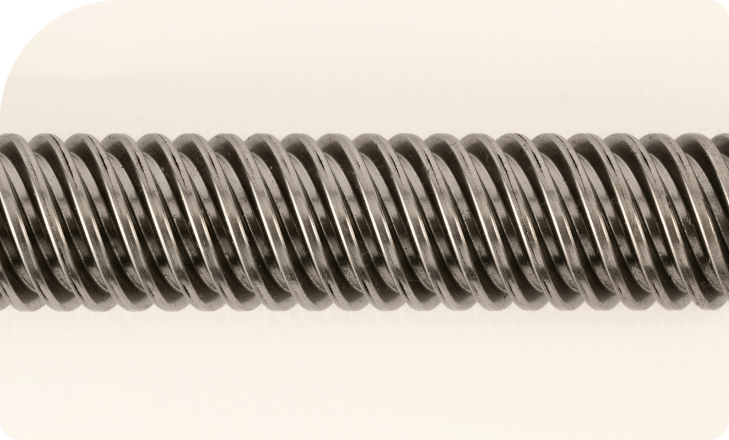
Excellence in rolled threading
The technology of roll threading technology, the cold deformation process of steel, was introduced in Italy by Paolo Montesi in the early 1980s, when it was still relatively unknown.
Inspired by early 20th-century German expertise, it marked the beginning of a technical evolution that is now deeply rooted in our production methods.
The company’s growth has followed the success of our rolled products in both the national and European markets, making Montesi an immediately recognized and trusted name in the industry.
In recent decades, the expertise gained in rolling has expanded to include the forming processes of worms and splines, further solidifying our position as a leader in the supply of high-precision rolled products.
Today, we can proudly claim collaborations with major multinational companies for the supply and prototyping of mechanical components, where rolling plays a strategic role.
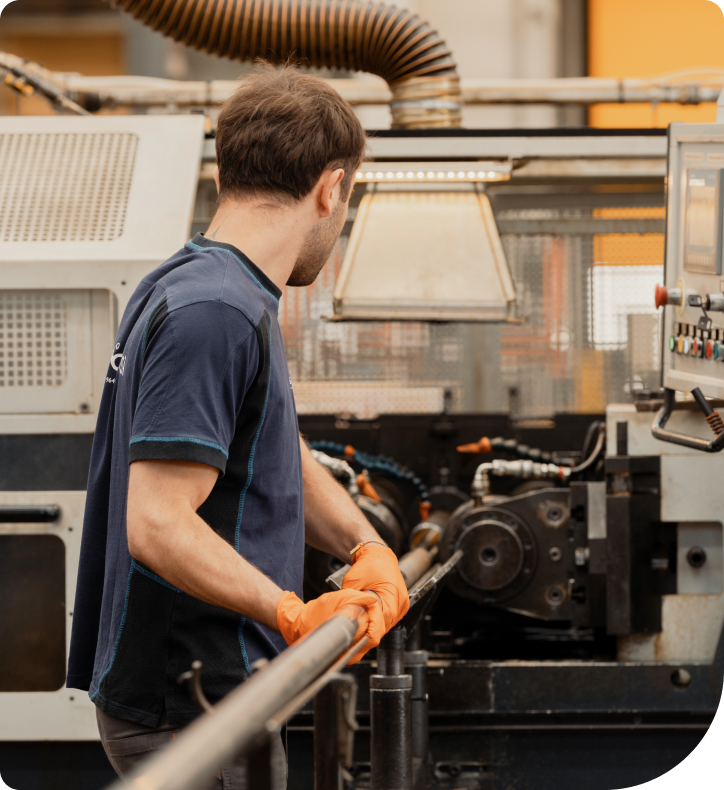
The rolling process and its advantages Read more
Rolling is a mechanical processing method that does not involve chip removal. It allows the creation of threads, formations, and surface superfinishes by passing the piece between rotating rolling tools. These tools deform and refine the outer surface of the raw material until the desired shapes and dimensions are achieved.
Rolling is often preferred over turning and grinding since the plastic deformation of the workpiece results in the material’s hardening, while preserving its mechanical properties.
This process is highly valued in sectors such as aerospace, automotive (splines on crankshafts), railway, oil & gas, wind energy, and off-road (earthmoving and agricultural machinery).
The main advantages of rolling include:
- Increased thread tooth resistance, leading to greater wear resistance.
- Excellent roughness values on both the thread flank and the base radius, superior to those achievable with removal processes like grinding.
- Continuity of the material’s fibers, unlike processes such as milled or turned threading, which interrupt the material fibers.
- Reduced sensitivity to notching.
- High productivity, resulting in operational efficiency and cost containment.
Applications for threading Read more
Bar threading to produce maneuvering screws, transportation screws, and ball recirculation screws.
The in passing roll threading process typically begins with the machining of steel bars, which are threaded along their entire length.
From these bars, screws of the desired length are obtained, and the ends are further machined for support and motion transmission.
Roll threaded screws, paired with sliding nuts, form a translation system used in a wide range of applications, both for heavy load manouvering (trapezoidal rolled screws) and for lighter equipment requiring higher speed (transportation screws).
Furthermore, roll threading allows for the creation of profiles compatible with ball circulation nuts.. In this context, rolled screws represent one of the highest expressions of the process, thanks to the ability to achieve high precision standards using CNC-controlled technologies and processes.
Rolled Threading of Semi-Finished Products
The dipping roll threading process consists in the machining of components that have been previously turned.
The excellence of the final result largely depends on the quality of this preparatory phase, an area in which Torneria Montesi relies on solid expertise and consolidated experience.
Rolled threading on mechanical components (including M, Tr, Whitworth, UNC, UNF, UNEF threads) is a standard choice for special applications, such as in the avionic sector, and consistently guarantees high standards of resistance and surface finish.
Additionally, the synergy with our Removal Division allows for the production of a wide range of components with removed threading.
Applications for forming Read more
Rolled worms
With rolling, plastic forming of steel can be achieved to create precision worms, which are typically paired with gears in angular motion transmission or reduction applications.
These processes involve a significant material displacement, making millesimal control of the large compression power crucial.
The most suitable type of rolling machine for this purpose is a numerically controlled one, capable of handling the so-called PSF (Precision Screw Forming) process.
Rolling on tailstocks represents the most advanced technical solution for producing worms with a level of precision that is competitive with, or even surpasses, that of worms typically obtained through cutting processes.
Rolled splines
Forced seating is a type of shaft-hub connection in which the shaft spline can be obtained by rolling using a rack or rollers.
Rack splining offers process stability and high productivity.
Splining with rollers offers size flexibility and extreme precision on the involutes.
Applications for Surface Finishing Read more
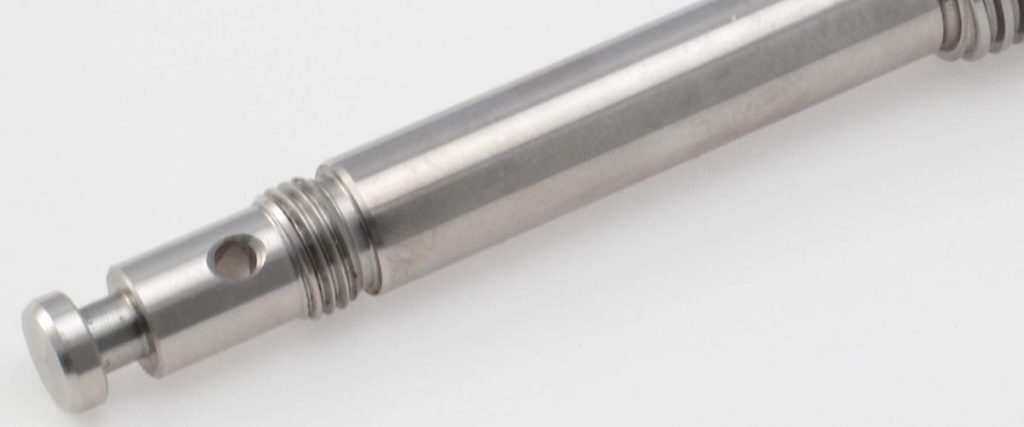
Rolled superfinishing, also known as lapping, is an ideal solution for achieving extremely low roughness on cylindrical parts.
Compared to grinding, this process allows us to achieve superior results in terms of roughness values, with faster processing times and greater economic efficiency.. The synergy and continuous feedback between turning and the subsequent rolled superfinishing process are key to achieving excellent results.
Common applications include shafts, rods, and drive screws in the valve industry.
What makes our roll threading technology unique Raed more
Screws
- Extensive inventory of rolling tools for different thread geometries.
- Wide range of diameters available, with both right-hand and left-hand threads, as well as single and multi-lead options.
- Screws made from carbon steel, ETG, high-strength special steels, stainless steel, and aluminum.
- A selection of standard products available in stock and accessible in the industrial distribution market.
Nuts
- Specialization in high-quality turning threading to produce nuts that ensure excellent coupling with rolled screws of any thread type.
- Control and customization of coupling runout.
- Highly productive and flexible turning departments for the production of conventional or custom-shaped nuts.
- Machining of metallic and plastic materials.
- Innovative solutions for dual material modular nuts.
Custom-designed products and special requirements
- Rolled screws with custom end machining, manufactured according to the support and motion transmission requirements defined by designers.
- Custom lead nuts made from special materials and with non-standard geometries, designed to meet the most complex requirements.
- Development of special thread profiles, in collaboration with our tooling partners specialized in rolling tools.
- Possibility of laboratory testing to empirically measure the performance of the screw–nut system.
EQUIPMENT
A combination of choices and investments that reflects Montesi’s philosophy.
Rolling machines:
- 1 high-precision CNC rolling machine for rolling on tailstocks
- 1 CNC rolling machine for bar threading
- 4 rolling machines for bar threading
- 1 rolling machine for special plunge threading
Rack forming rolling machine:
- 1 unit for rolled splines with automation
- 1 manned unit for rolled splines
Rolling tools
- Extensive roller warehouse
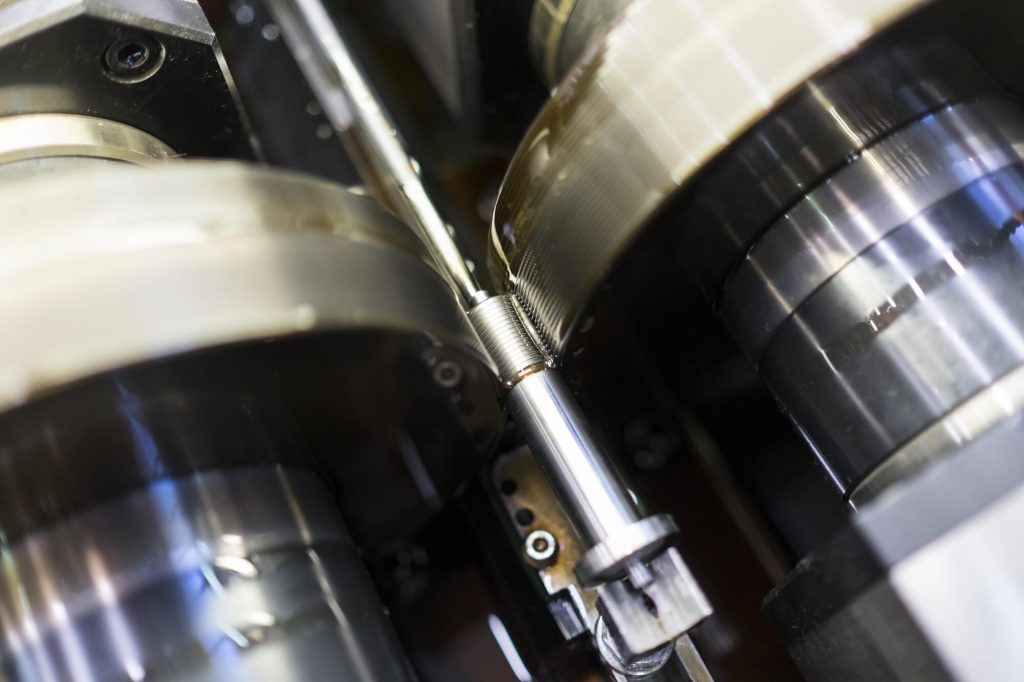
ROLL THREADING TECHNOLOGY
Trapezoidal profile manoeuvring screw threading
Drive/multi-start screw threading
Filettatura viti ricircolo
Automated straightening
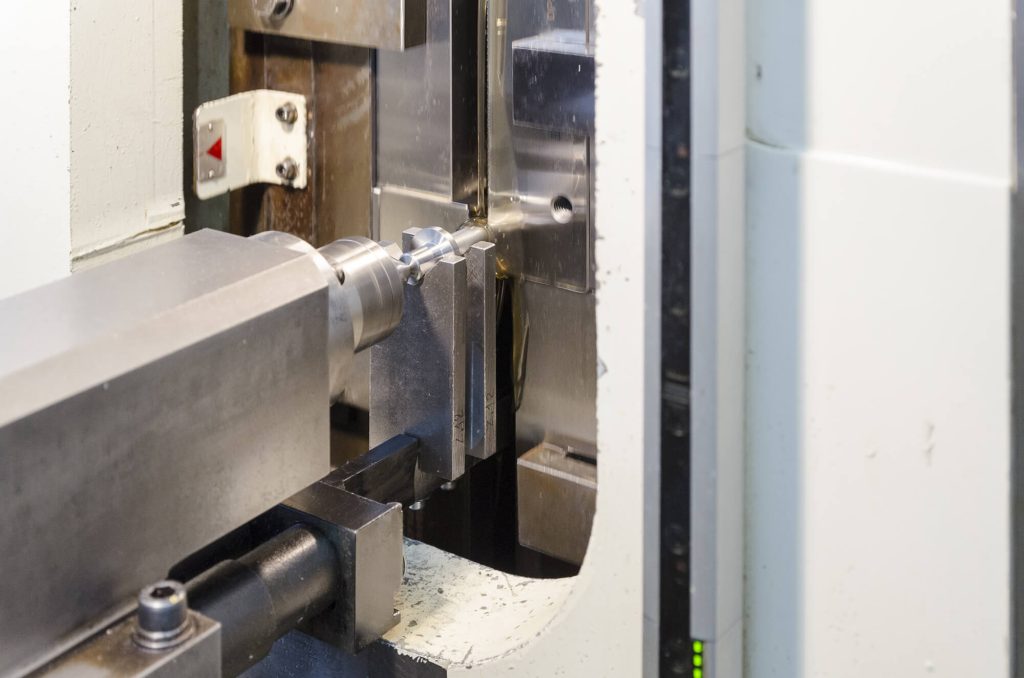
Lapping and surface superfinishing
A fully equipped department specialising in precision lapping.